



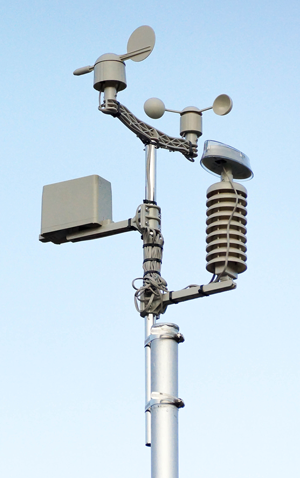
 Every day, weather stations and environmental sensors around the world collect millions of observations. From temperature and wind speed to precipitation, humidity, soil conditions, and more, these measurements help us understand what’s happening in our environment.
But collecting observations is only the beginning. What happens to that data after it’s collected? How does a measurement from a weather station become useful information for a meteorologist preparing a forecast, an emergency manager monitoring a developing storm, or a utility working to protect its infrastructure?
The answer involves more than simply gathering data. It requires collaboration, quality control, reliable access, and the tools to turn individual observations into information people can actually use.
Making Environmental Data More Accessible
Weather and environmental observations come from a wide range of sources. Government agencies, universities, private companies, research institutions, and community networks all operate observing systems that collect valuable information.
Each network serves its own purpose, but the observations often have value far beyond their original application. A station installed to support agricultural operations might also provide useful information for weather forecasting. A network monitoring conditions along roadways could help emergency managers understand local weather impacts.
The challenge is that these observations are often spread across different organizations, systems, and formats. Some networks make their data publicly available, while others have restrictions or technical limitations that make sharing more difficult.
Bringing these diverse sources together helps expand the reach and usefulness of environmental observations. Through partnerships with hundreds of public, private, and academic data providers, Synoptic brings observations from around the world into a single platform. This makes it easier for organizations to access data from multiple networks without having to establish and maintain individual connections to each one.
For data providers, it also creates opportunities for their observations to support applications and communities beyond those they originally intended to serve.

Turning Observations Into Reliable Information
Access to data is important, but having more observations doesn’t automatically make them useful. Environmental data comes from many different types of instruments, networks, and reporting systems. Stations may report at different intervals, use different units, or follow different measurement practices. Instruments can also malfunction, communications can fail, and observations can occasionally contain errors.
For organizations relying on this information, sorting through these differences can require significant time and resources. That’s where data standardization and quality control become essential. Synoptic processes incoming observations to provide consistent formats and applies automated quality control checks to help identify questionable measurements. Rather than altering the original observations, quality control flags allow users to understand potential issues and determine how to use the data appropriately.
Timeliness matters, too. For applications such as severe weather monitoring, wildfire response, or utility operations, conditions can change quickly. Reliable, low-latency access helps ensure that the latest available observations reach the people and systems that depend on them.
Together, these processes help transform data from many independent networks into a more consistent, accessible resource.
Putting Environmental Data to Work
Once observations are accessible and reliable, they serve as a critical resource for a wide variety of industries. Different organizations use environmental data in different ways, and the tools they need depend on the questions they’re trying to answer.
Weather forecasting and research: Meteorologists use observations to monitor current conditions, evaluate forecasts, and improve their understanding of weather events. Researchers rely on both real-time and historical measurements to study environmental patterns, validate models, and investigate changes over time.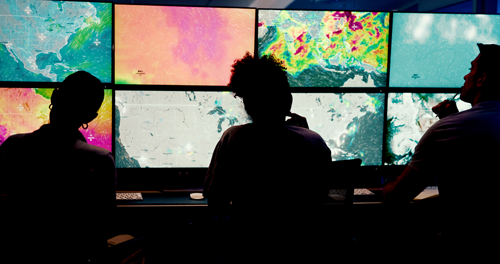
Emergency management: Local and regional emergency managers use real-time observations to maintain situational awareness during severe weather, flooding, and other hazardous conditions. Monitoring changing conditions and establishing notifications for specific weather thresholds can help teams coordinate their response and protect communities.
Energy and utilities: Utilities monitor wind speeds, humidity, temperature, and other environmental conditions to assess risks to infrastructure. Access to localized observations can support wildfire preparedness, outage response, and day-to-day operations.
Agriculture and environmental management: Farmers, researchers, and agricultural organizations use weather observations to monitor growing conditions, estimate pest and disease activity, and manage resources. Historical observations also help identify patterns that inform future planning.
Weather technology and innovation: Developers and technology companies integrate environmental observations into applications, forecasting tools, and analytical systems. Reliable access to real-world measurements also supports the development, evaluation, and improvement of predictive models.
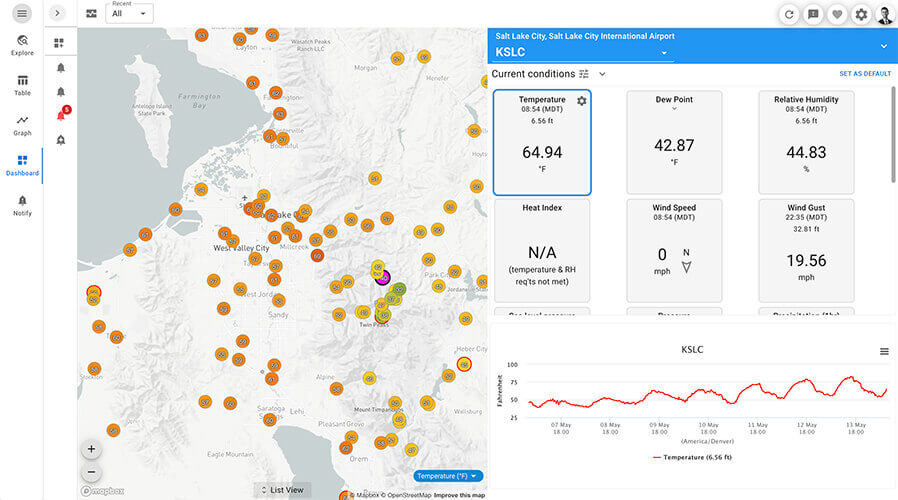 These are just a few examples of how environmental observations support activities across industries. While the applications vary, they share a common need: access to trustworthy data in a form that fits their workflow.
For some, that means visualizing conditions on a map or dashboard. For others, it means receiving notifications when thresholds are reached, integrating observations through an API, or streaming new measurements directly into operational systems. The goal isn’t always to provide more data, it’s also to make the data easier to use for the people and organizations that depend on it.
Extending the Impact of Every Observation
As a Public Benefit Corporation, Synoptic believes that access to reliable environmental data makes a meaningful difference for people and communities around the world. Our mission goes beyond providing data services. We’re committed to helping advance scientific understanding, derive meaningful insights from weather and environmental data, and support the organizations working to address environmental challenges.
This commitment shapes how we work with partners across the public, private, and academic sectors, and why we continue to invest in making environmental observations more accessible and useful. As new technologies expand how we collect, analyze, and apply environmental data, the opportunities to make a positive impact will only grow.
Because the real value of environmental data isn’t just in what we collect. It’s in what we can accomplish with it.